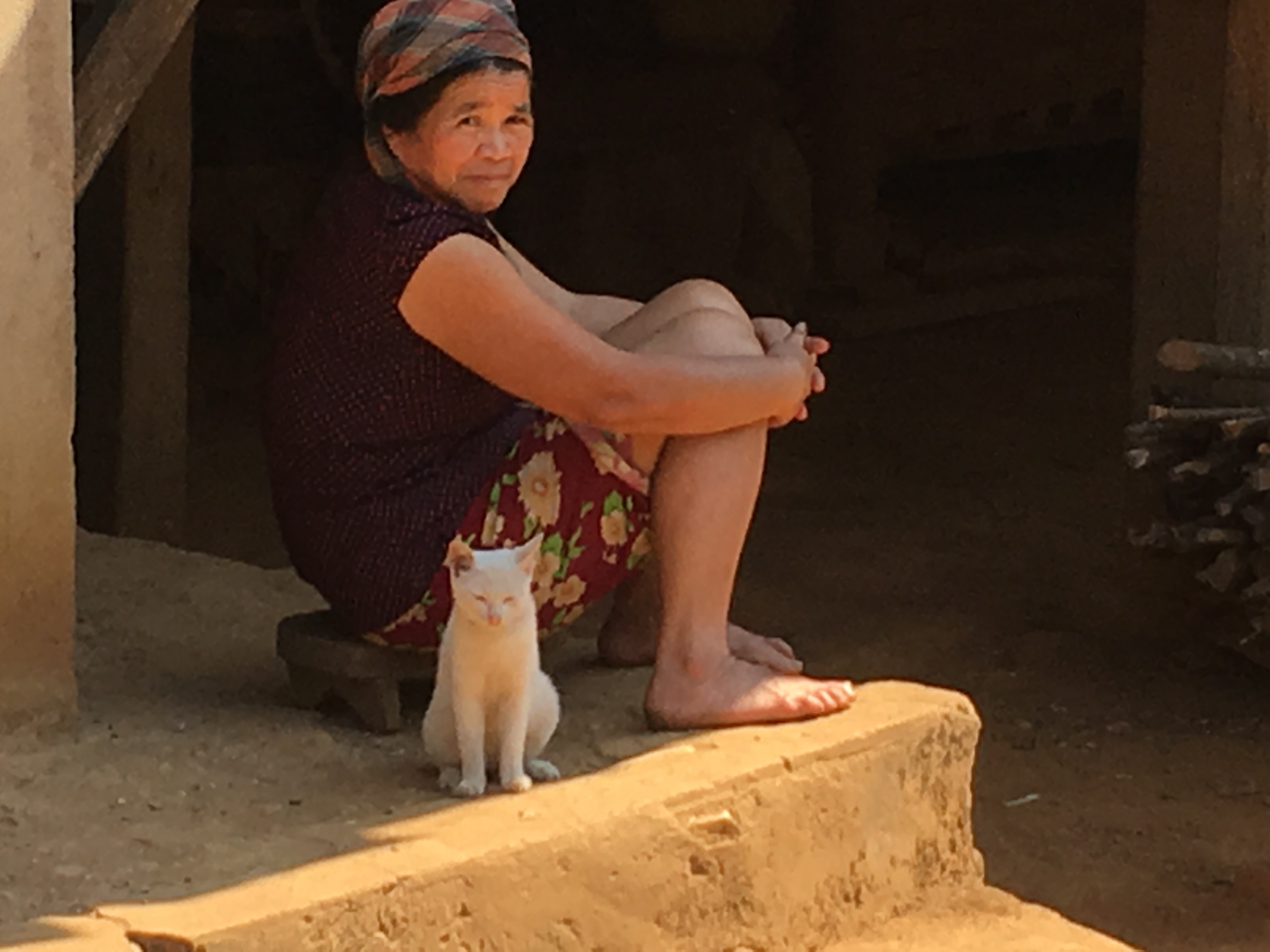
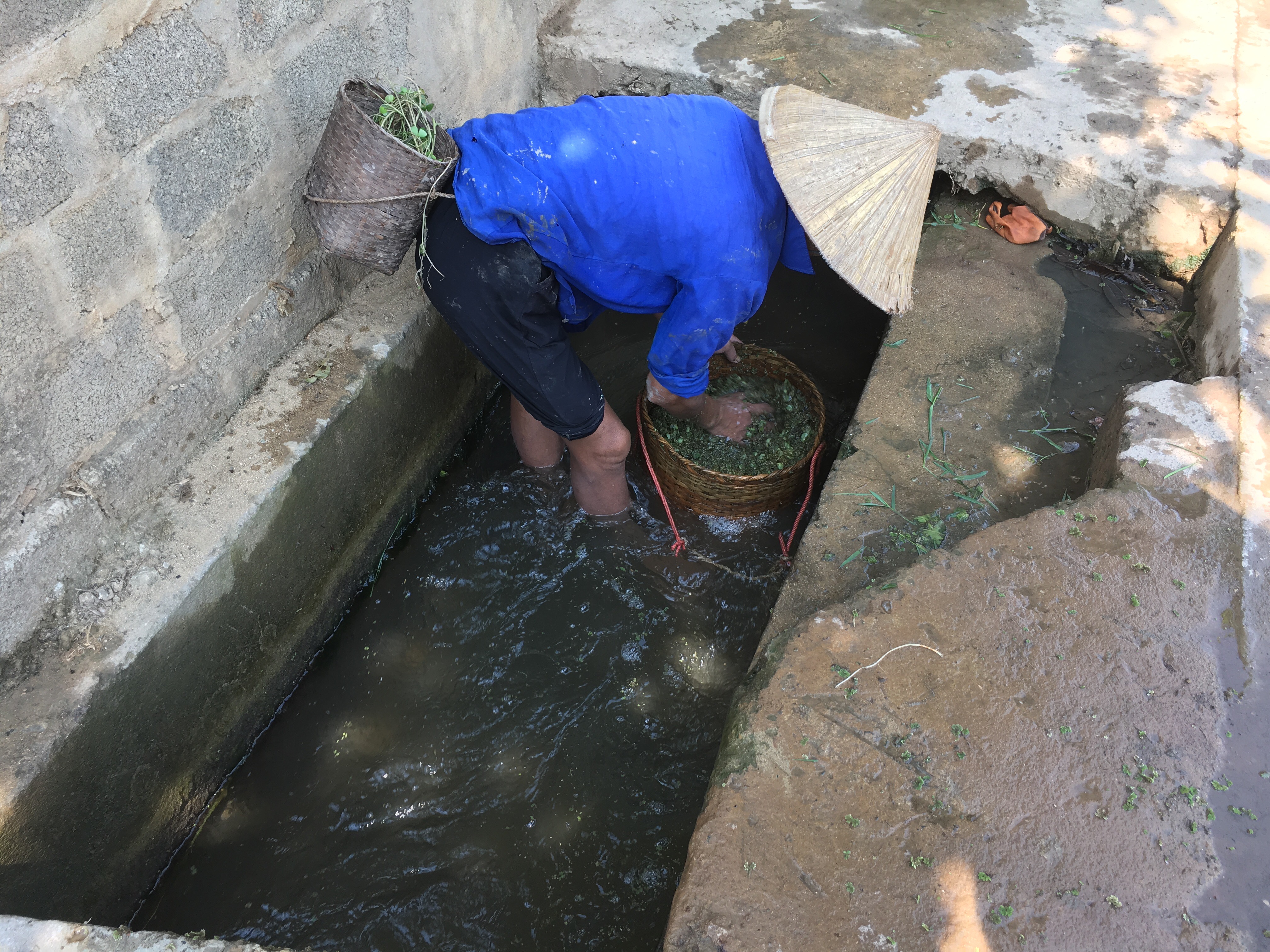
 The rare cat, many cute dogs. Lots of washing food in various types of water.
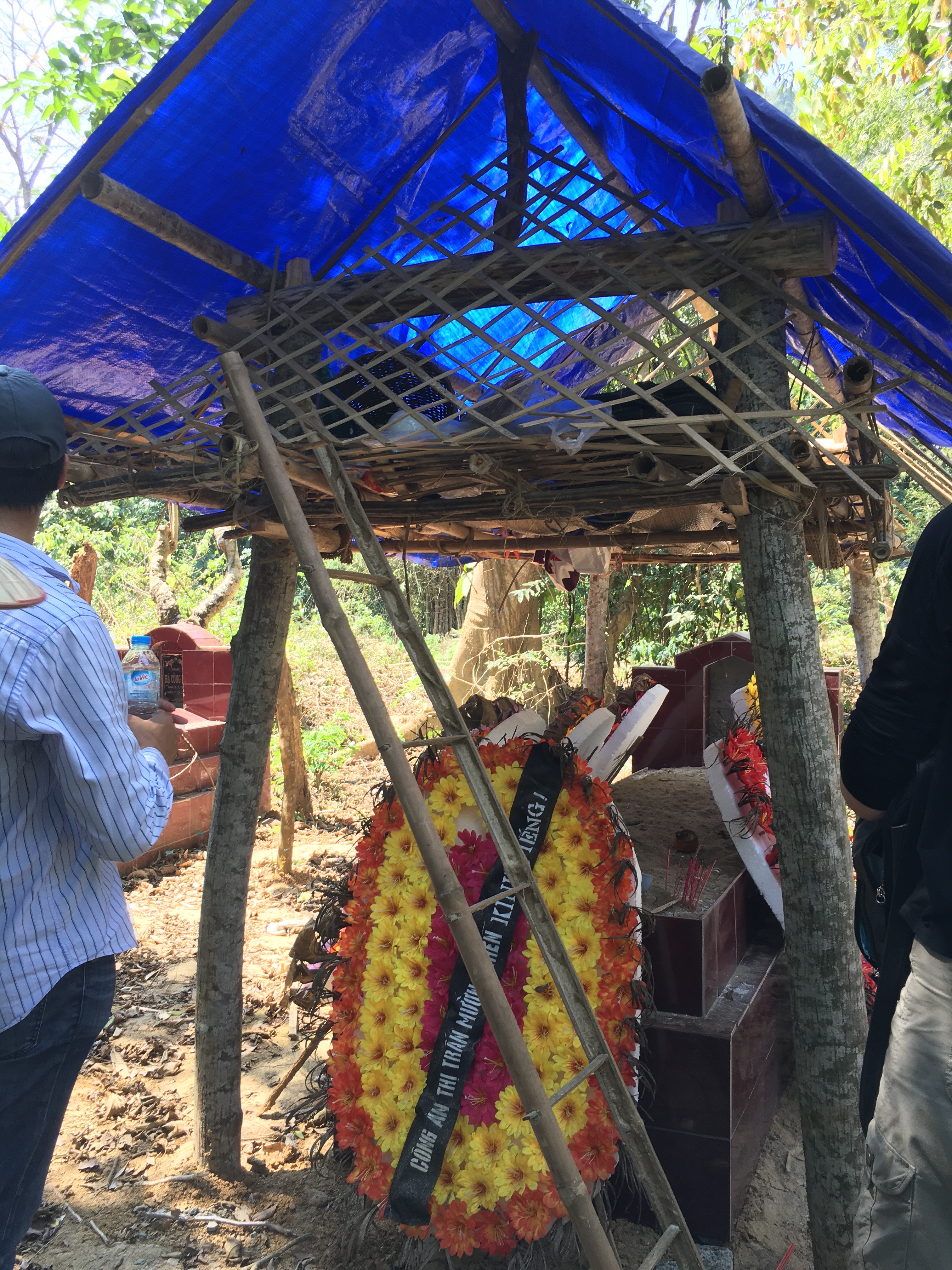
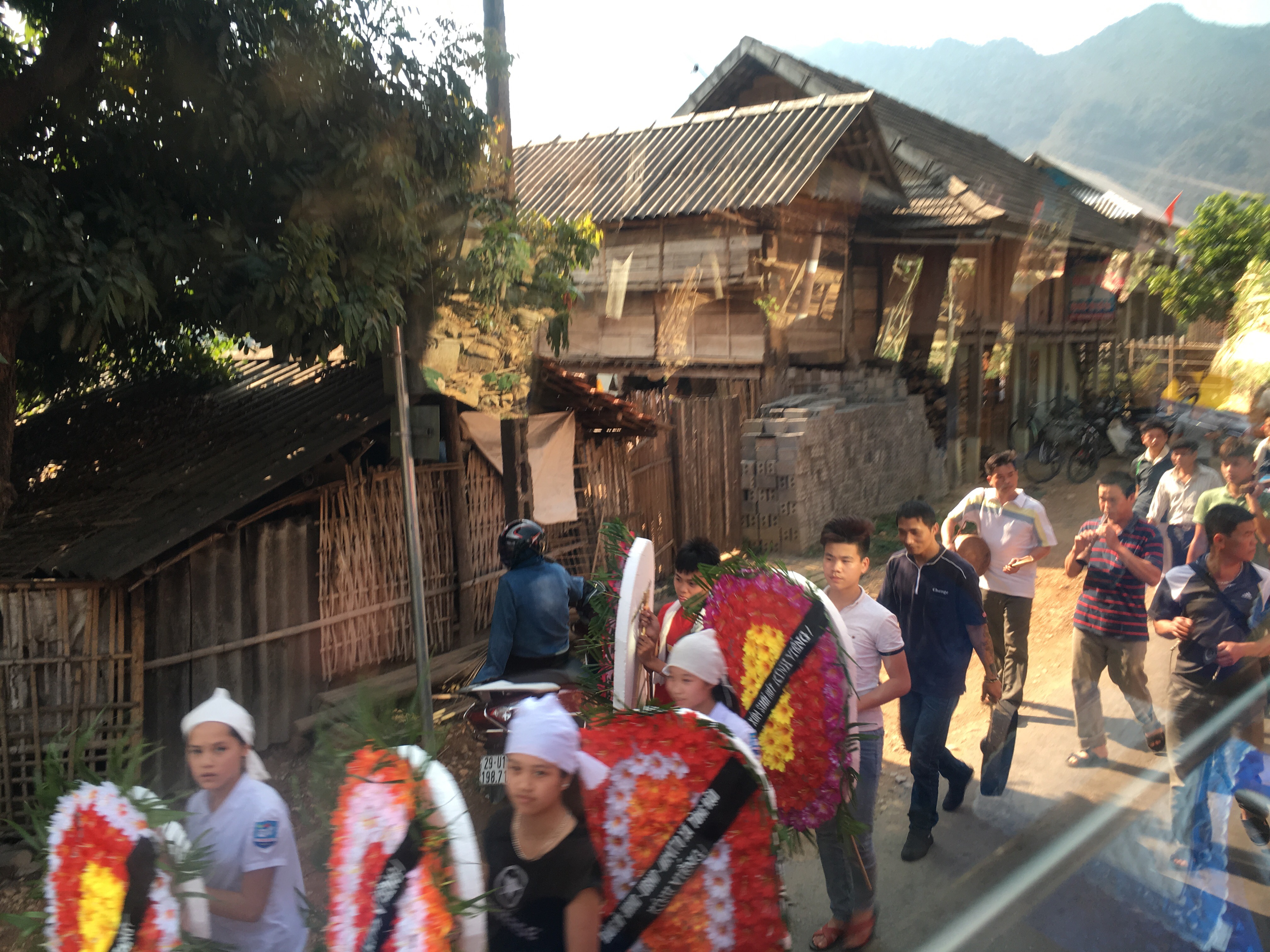
Wonderful and varied funeral practices. They believe that the soul/spirit needs help in moving on to the next life and that if it stays around too long, or if a sudden death leaves no time to prepare and support the spirit’s transition, the dead person will try to bring others into death. This makes all the grieving relatives active participants in the rituals with a unified achievable goal rather than helplessly feeling emptiness and loss. The structure around the grave above has a ladder for the spirit to climb up to the upper storage level, like their houses, where tools, food, and useful items are provided to get going on the journey. We saw an old graveyard with a stone at the foot and another at the head but they have recently gone in for modern carved stones. Our guide’s people bury the body for three years to save up for a carved stone then dig up the bones and re-bury. Below, we happened on a funeral procession.
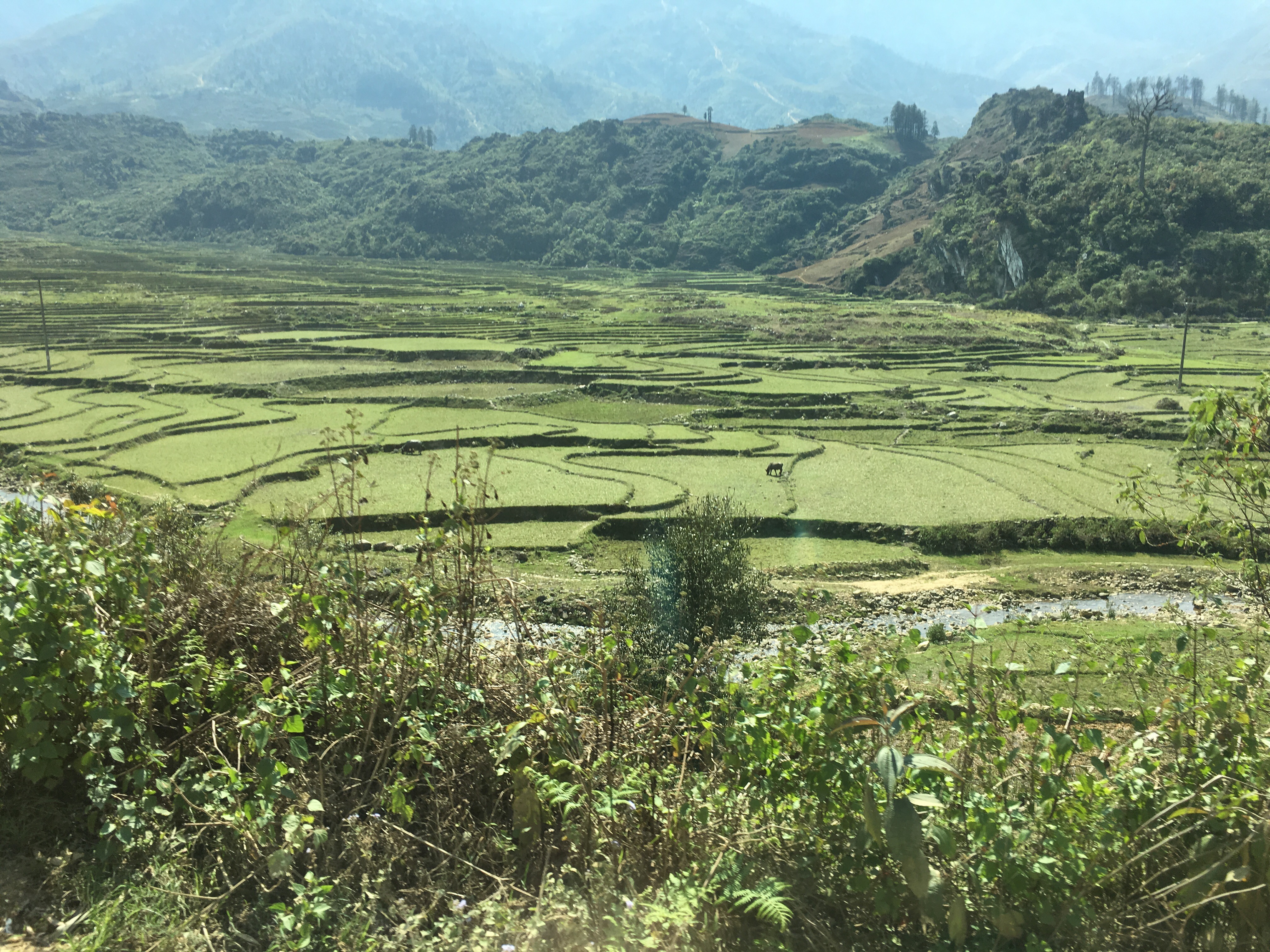
On route to a Sapa whose field’s were not yet planted for their one season of rice.
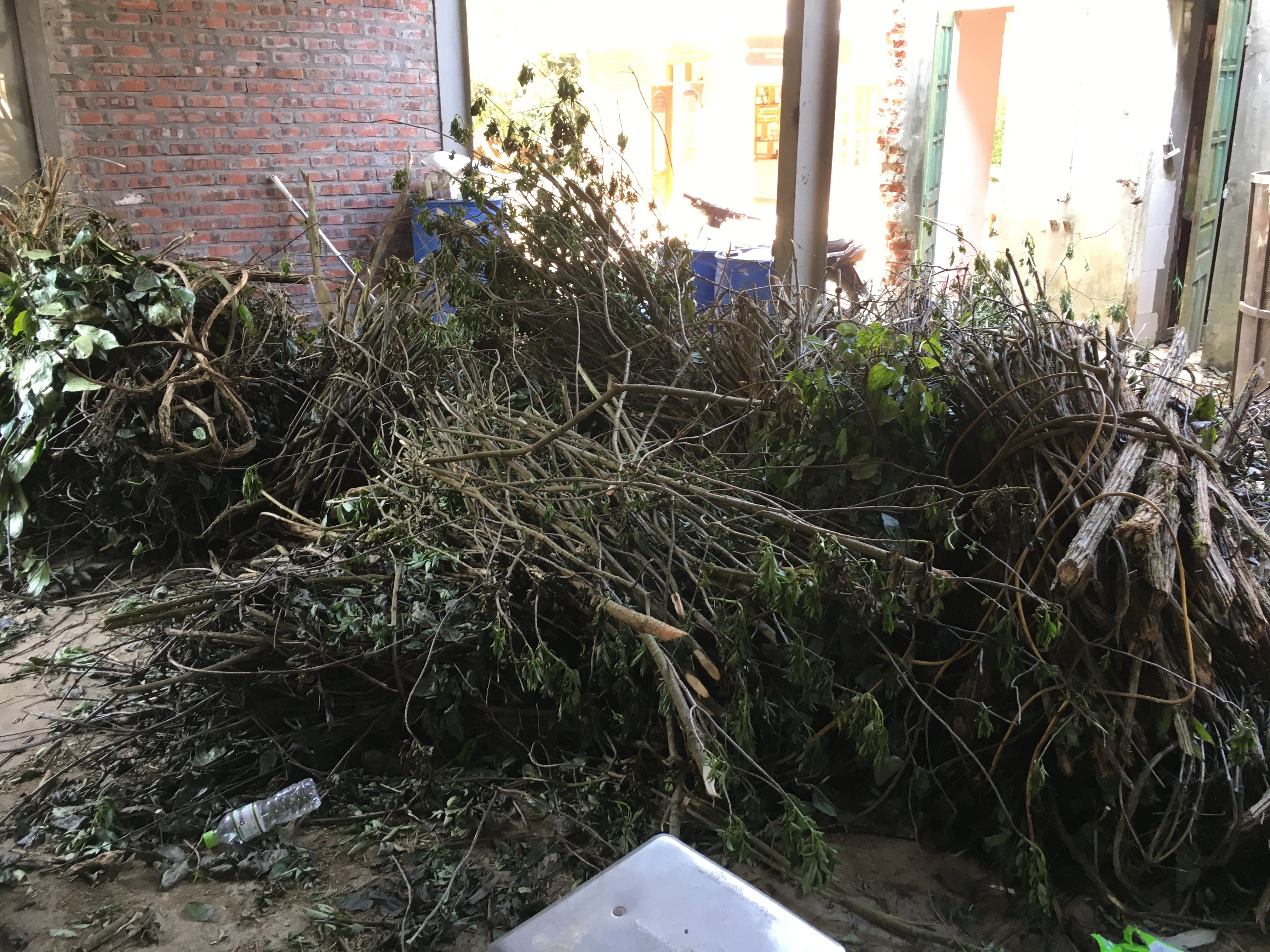
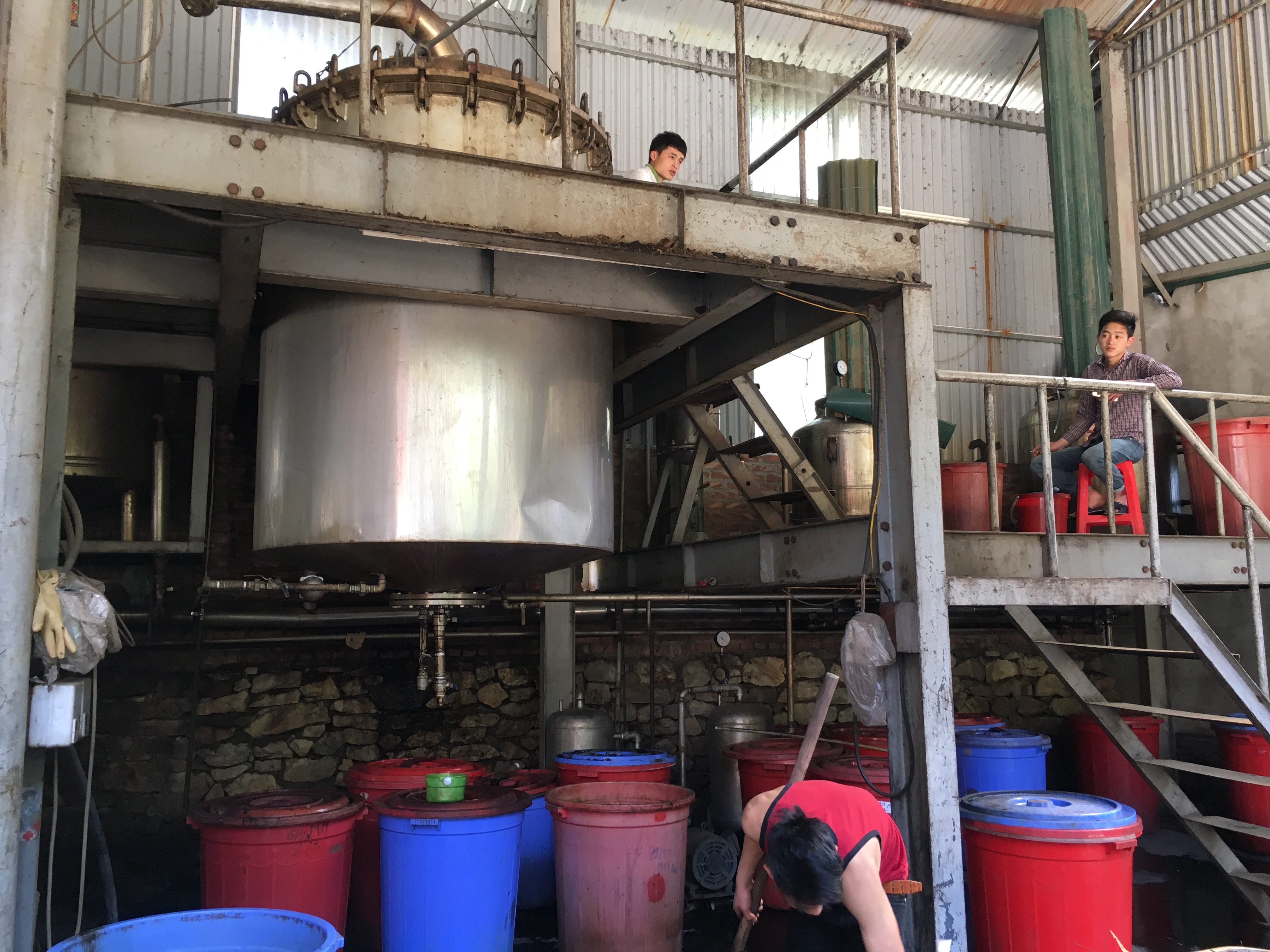
The next three show the plants that are next boiled into a special concoction, then the greenish liquid is piped into tubs for the medicinal spa baths of this tribe.
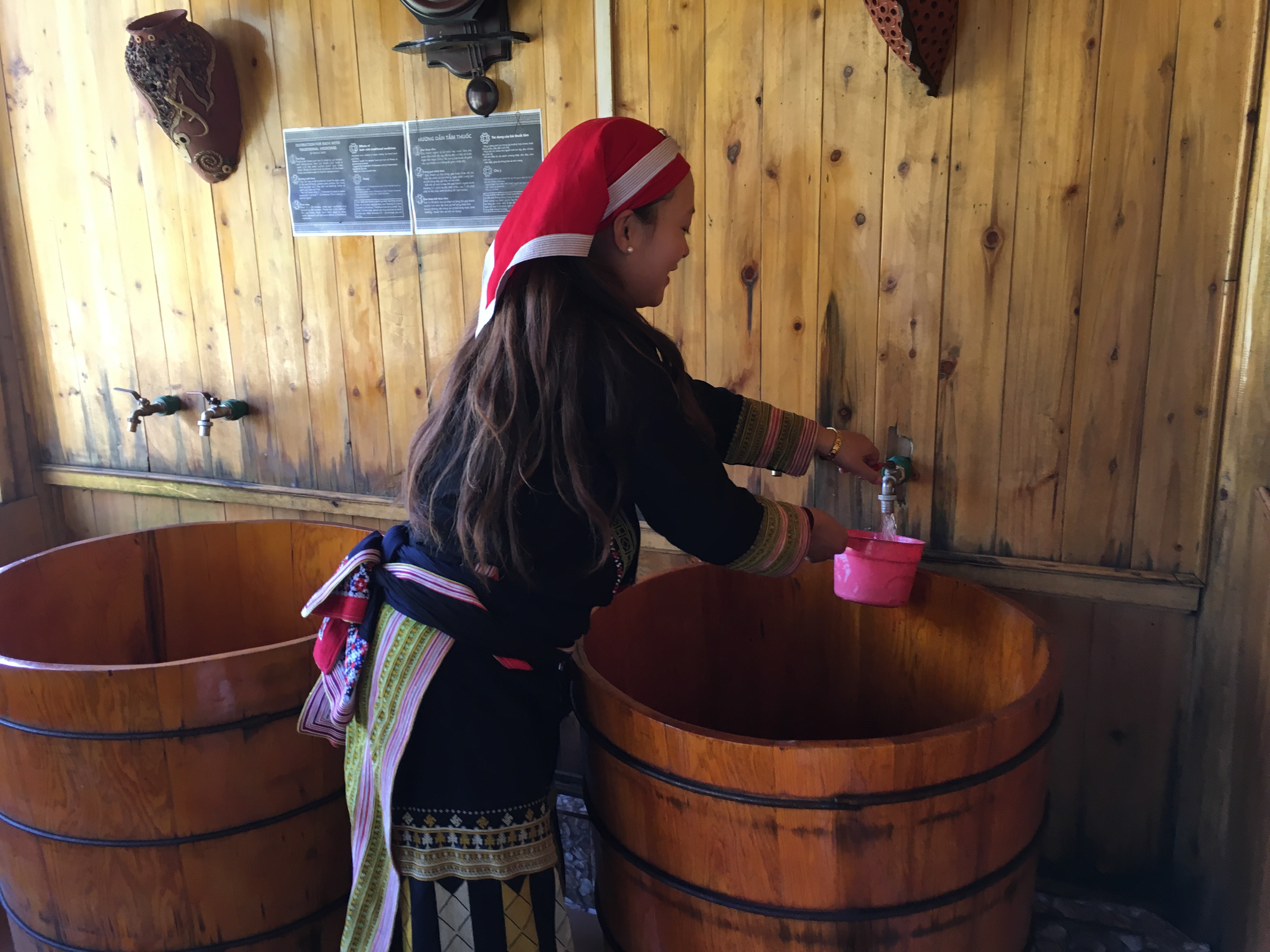
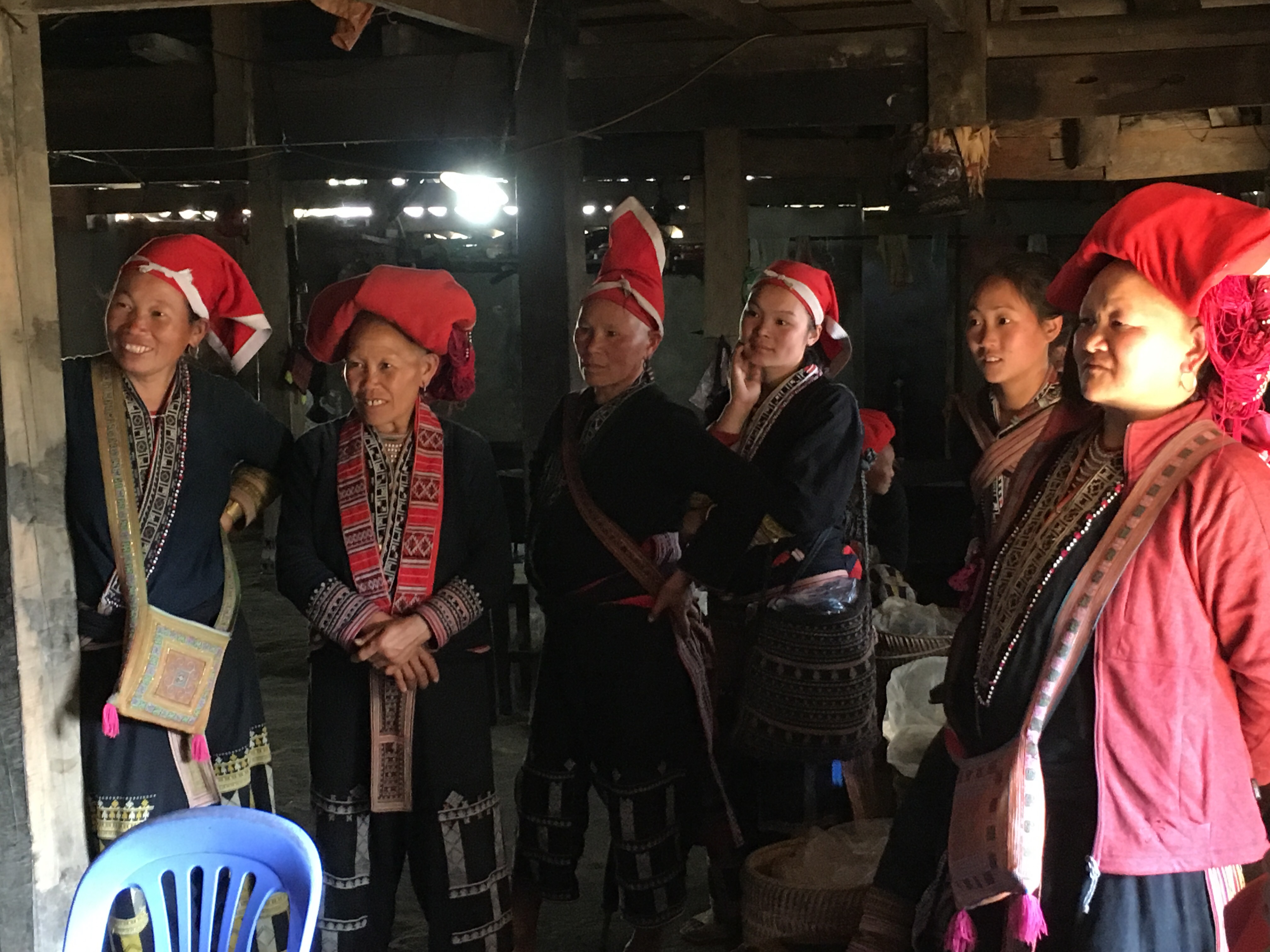
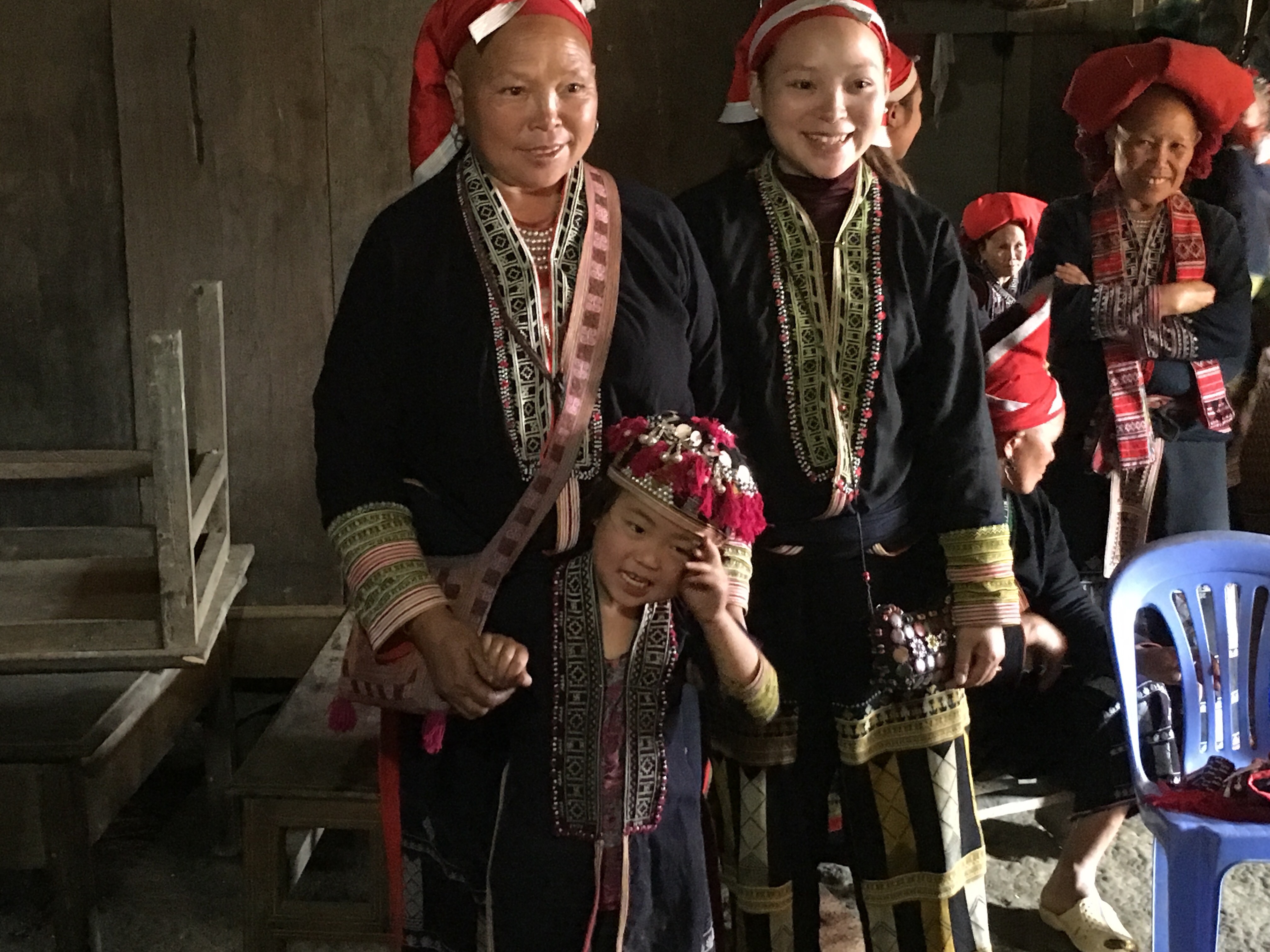
Our tribal guide, Mai, brought us to her Mom’s house with her sister-in-law, niece and neighbors. They are Red Thai.

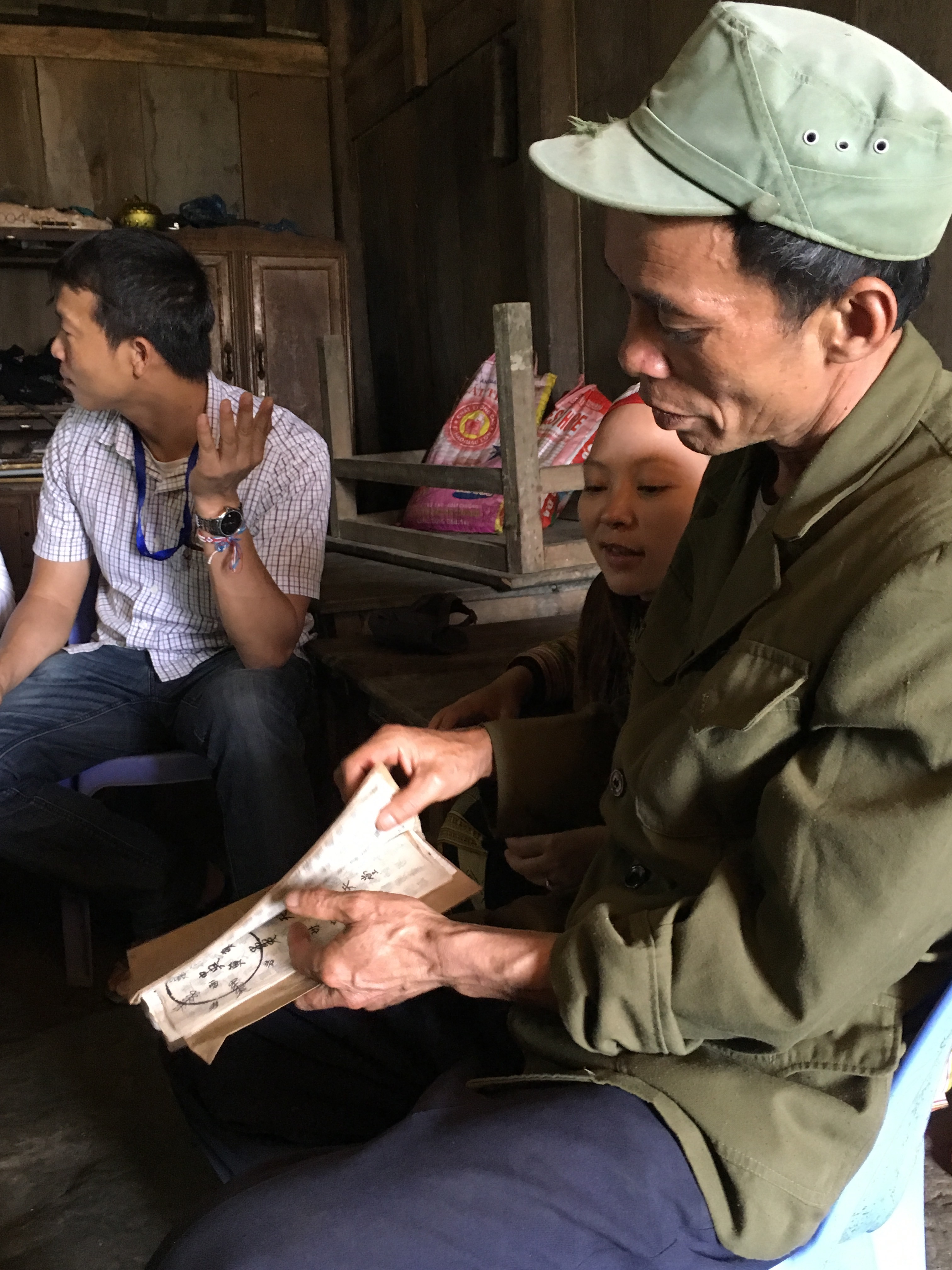
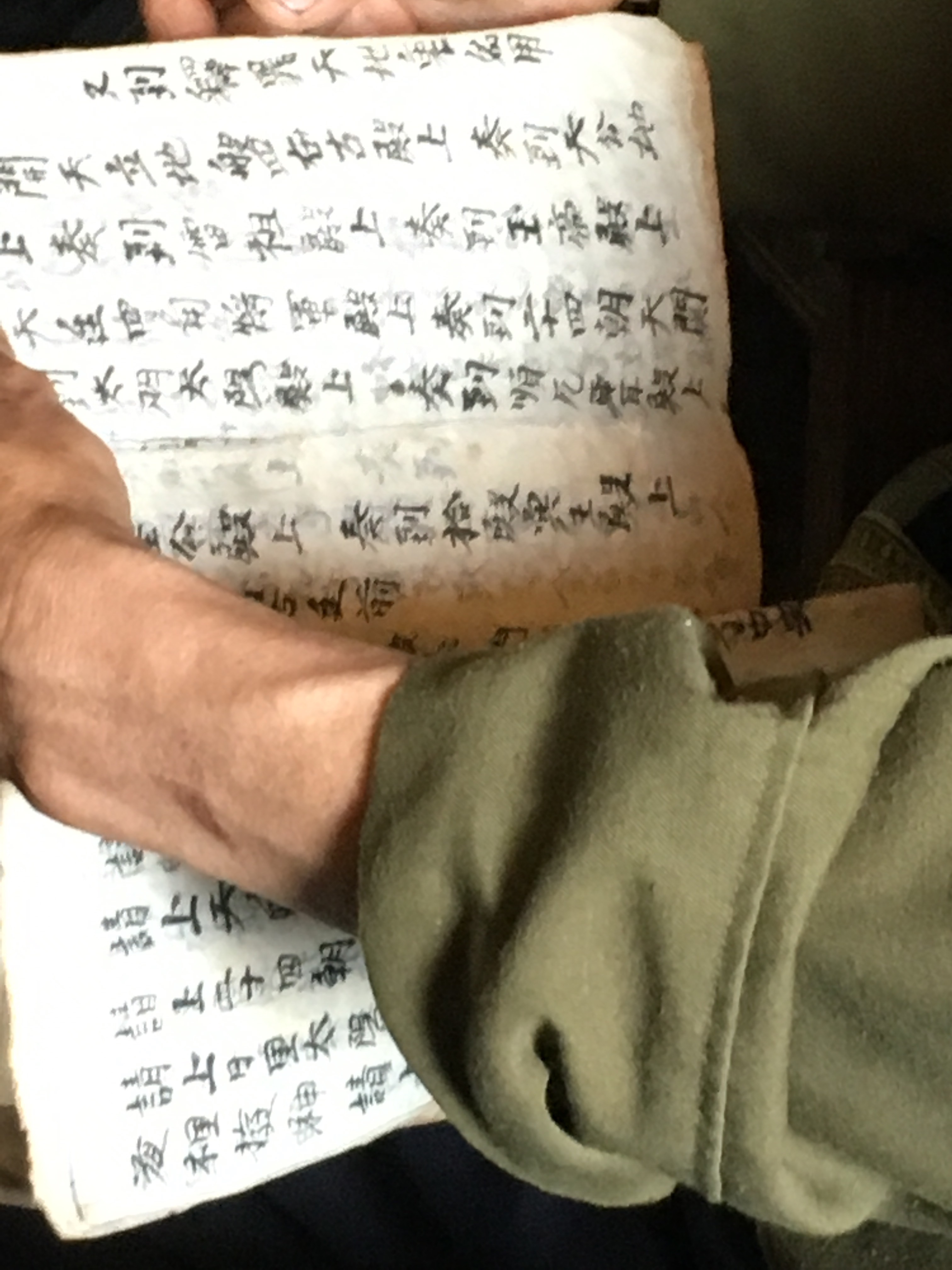
Mai’s dad is the Shaman. They brought out the valuable guide book that was his father’s and grandfather’s. He has not yet taught one of his two son’s so hope he stays well.
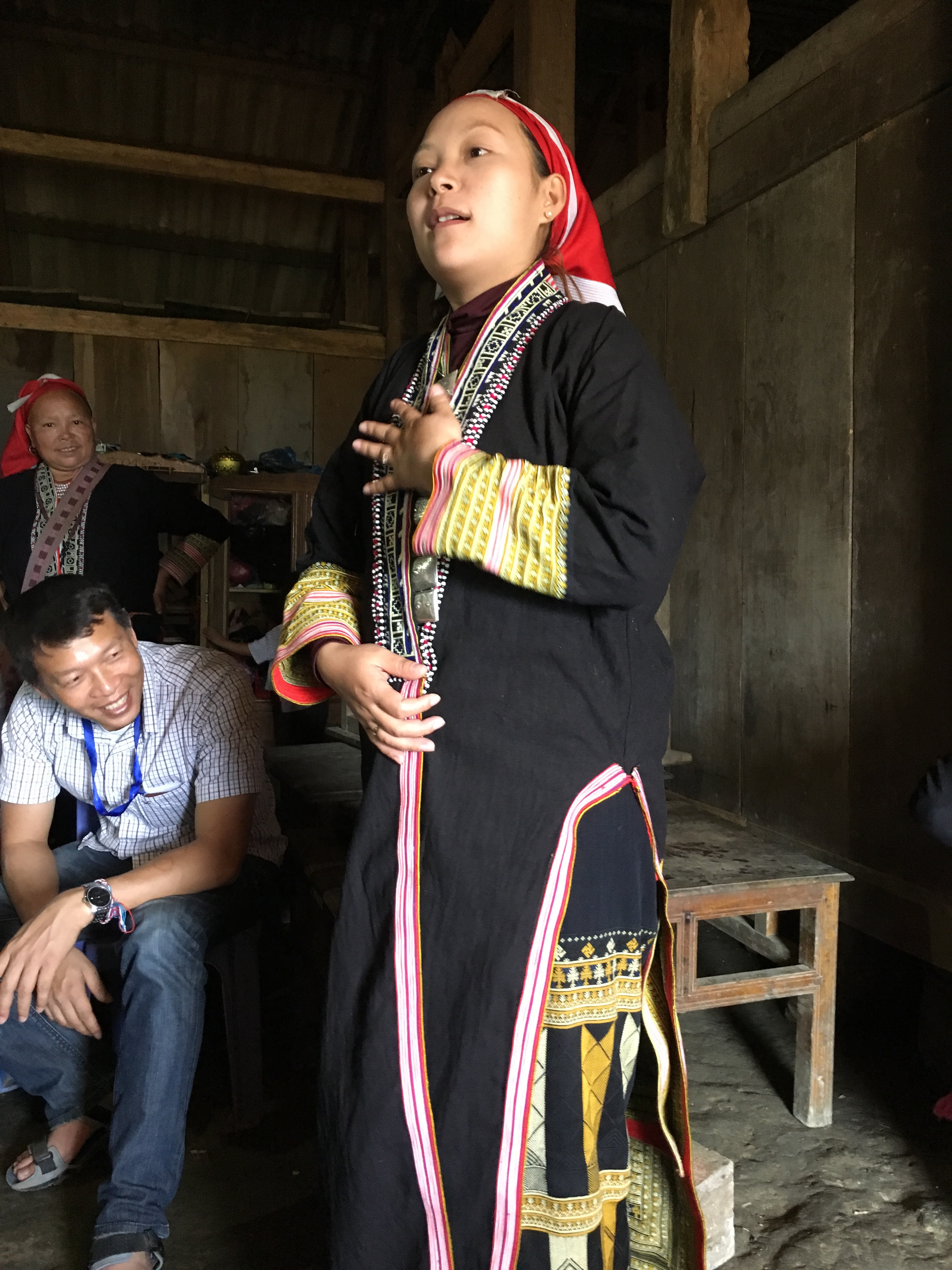
Mai’s Mom brought out her wedding outfit that Mai should have fully embroidered but her Mom helped. Mai refused the arranged marriage in her early teens. She became one of the first female guides and described where her friends are now and many married foreigners and live somewhere else.
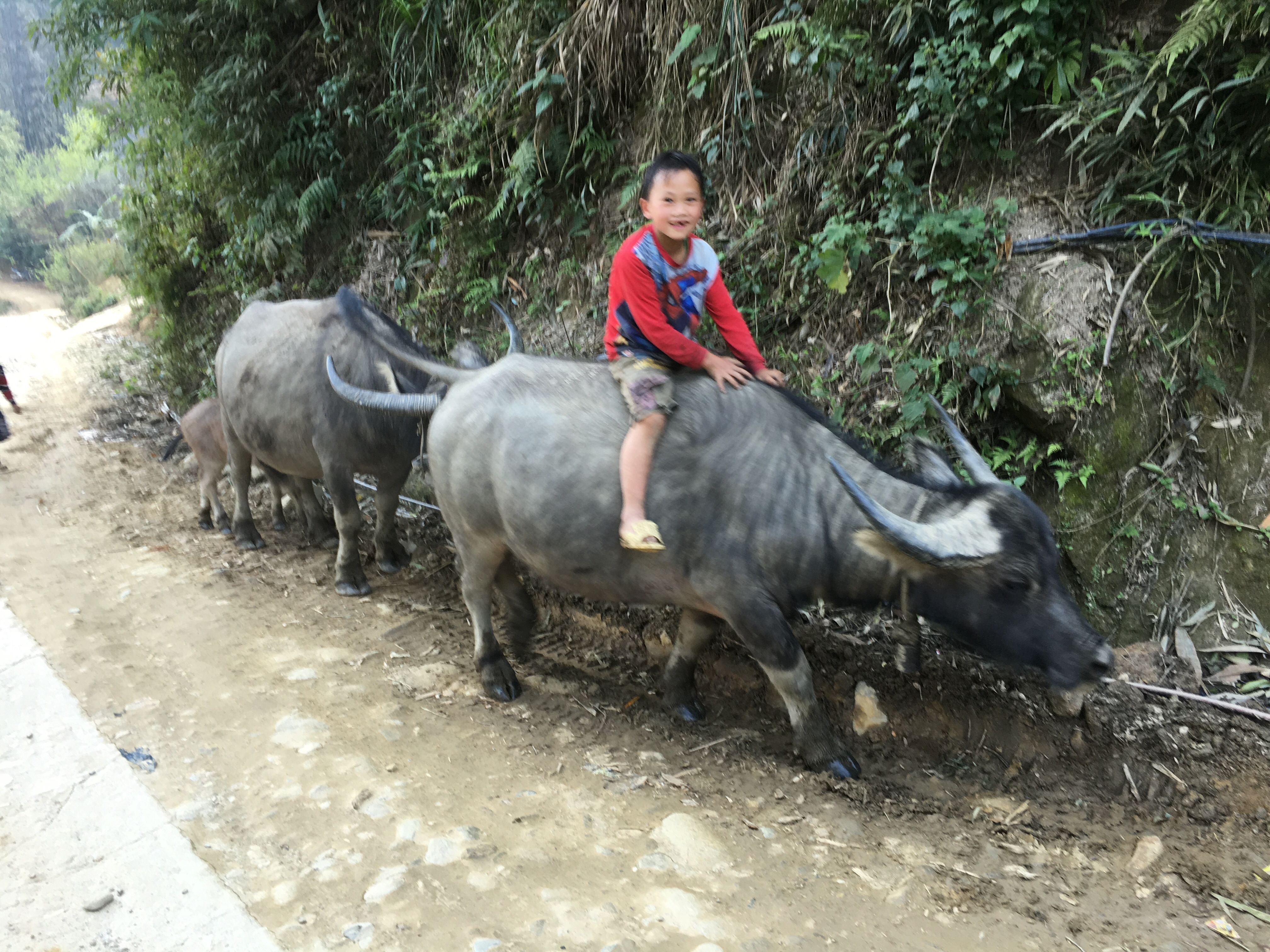
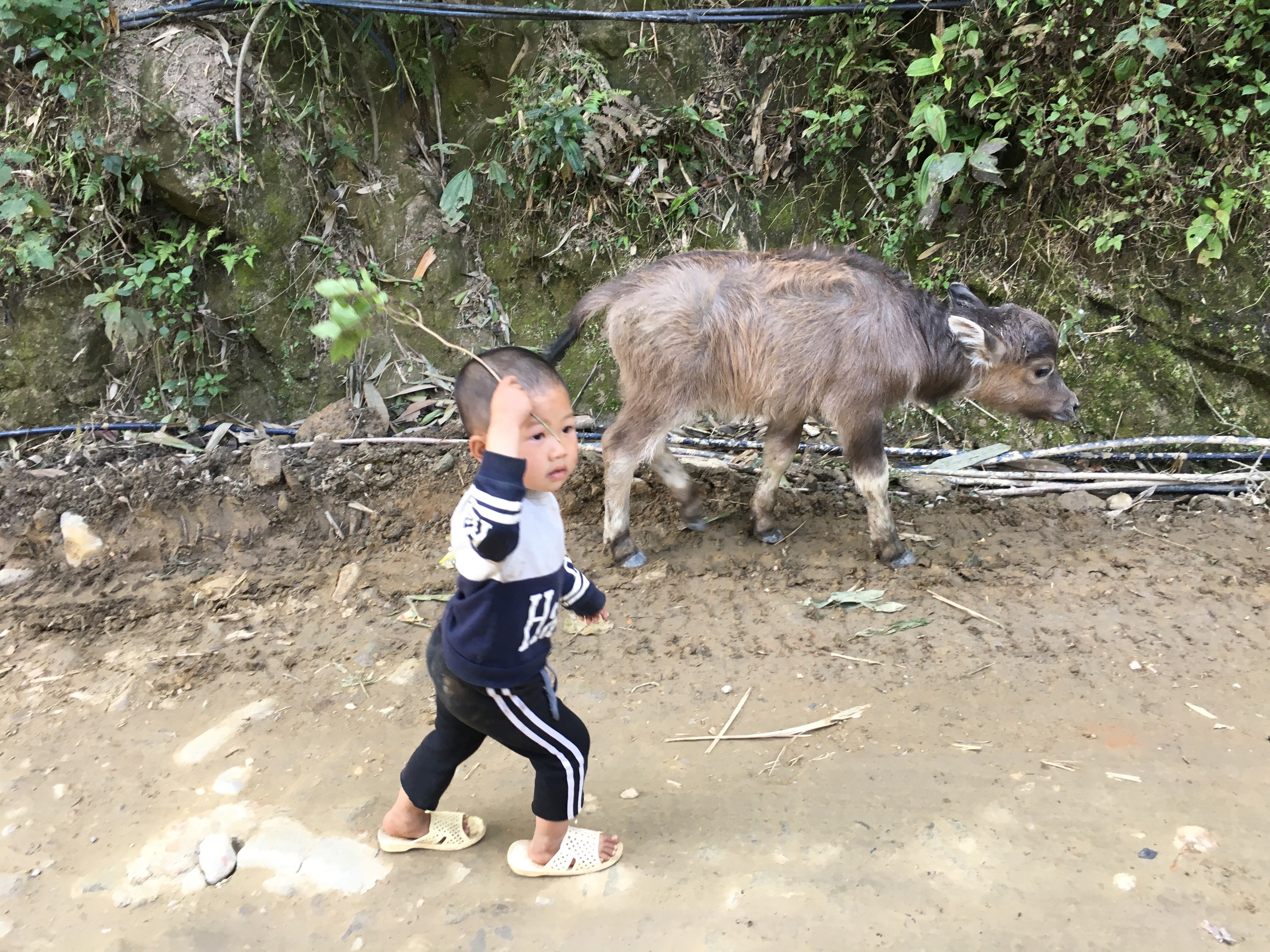
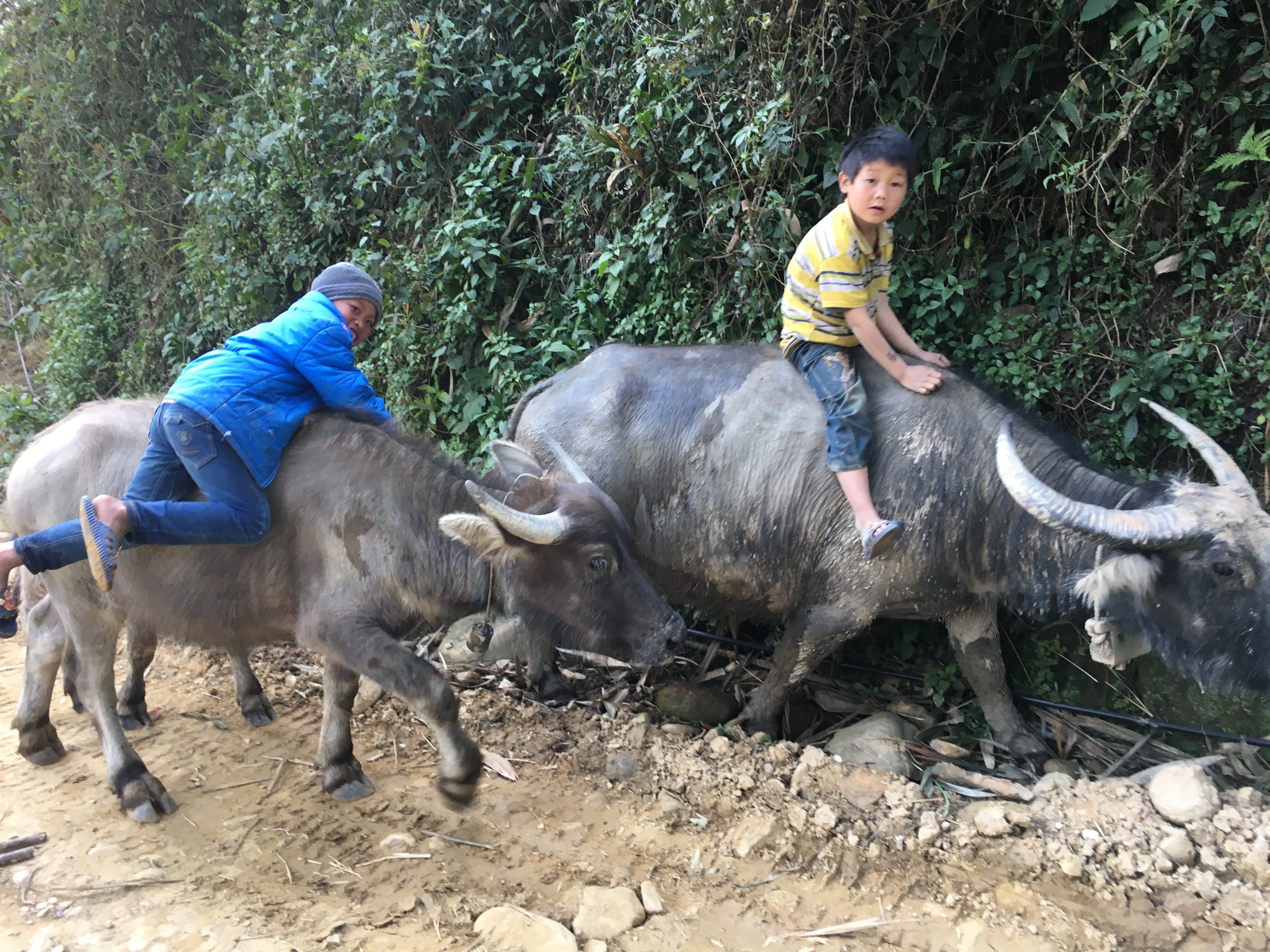
Water buffalos are mostly tended by the kids.
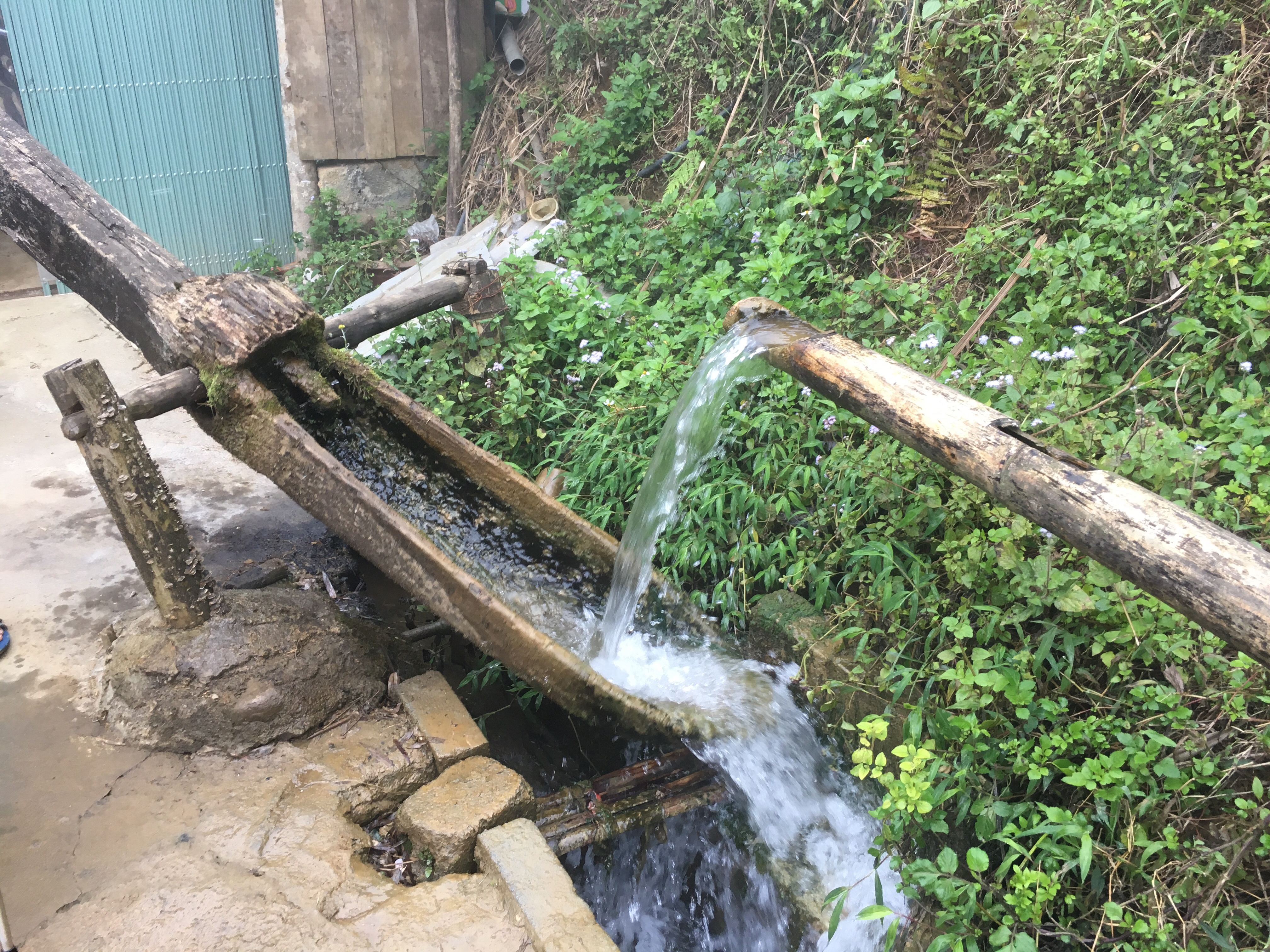
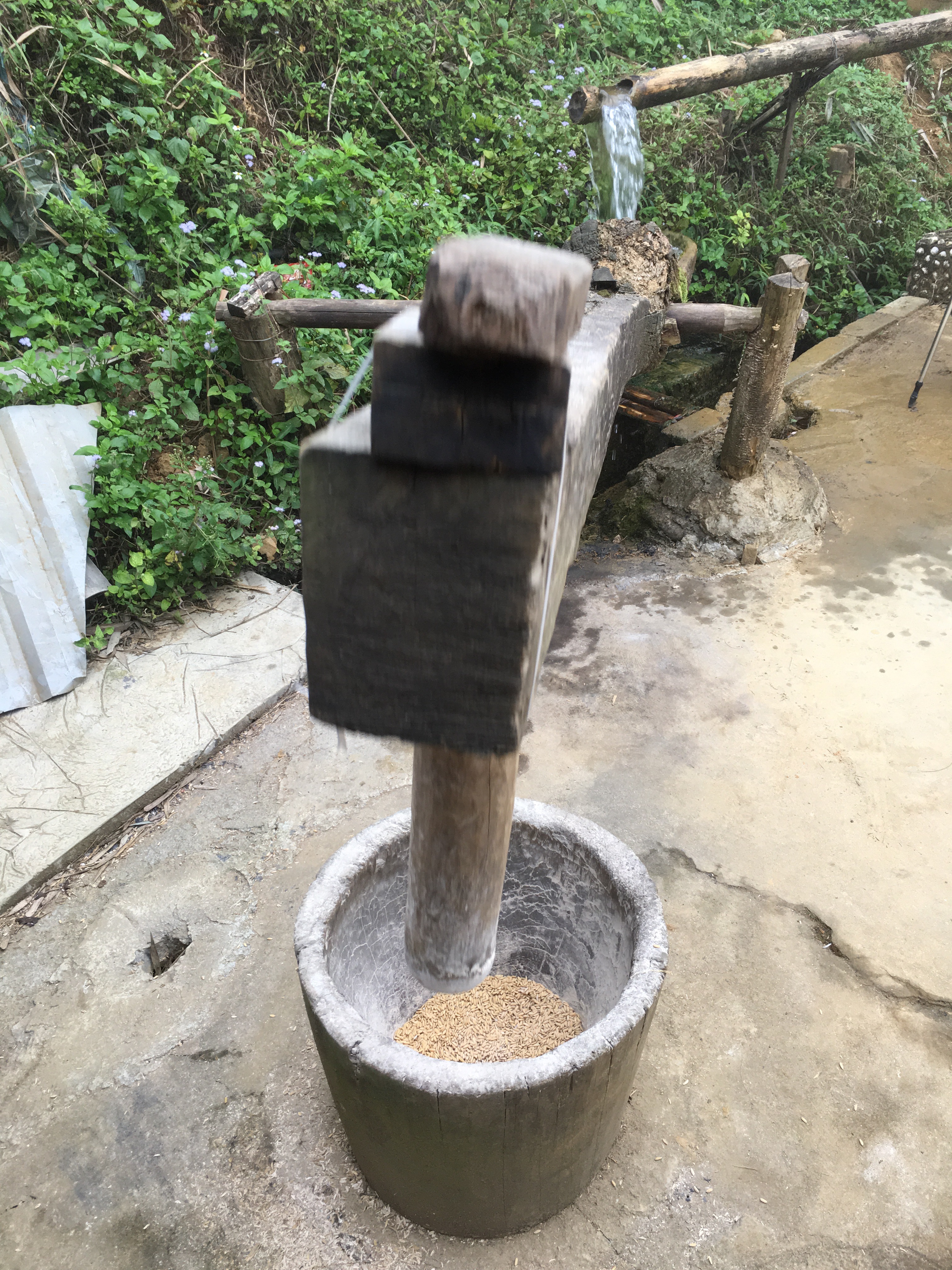
Above and below an old rice husking, water-powered contraption. Each village and many homes have an electric one now.
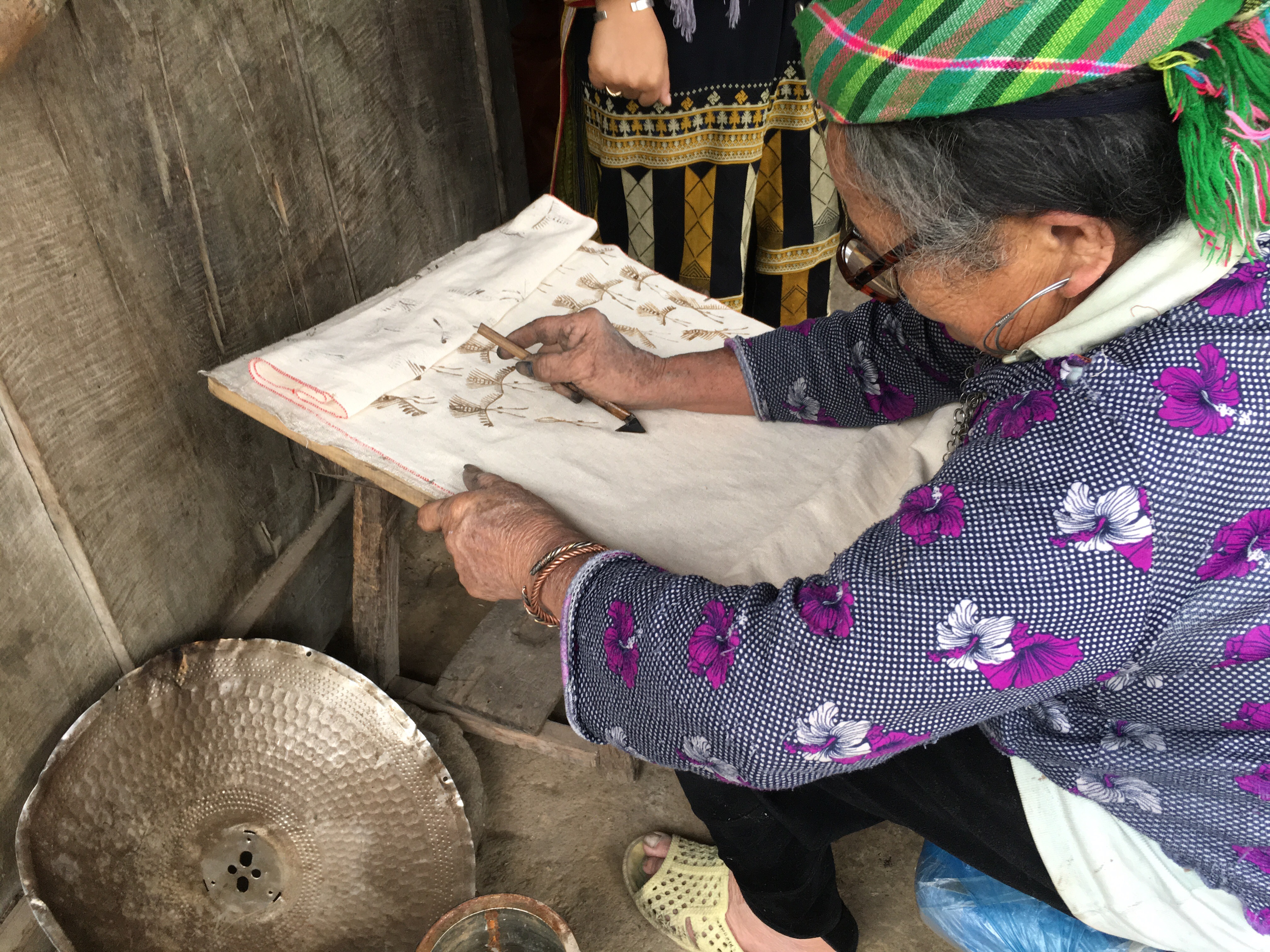
A black Hmong woman drawing in wax after she wove clothe on her loom.

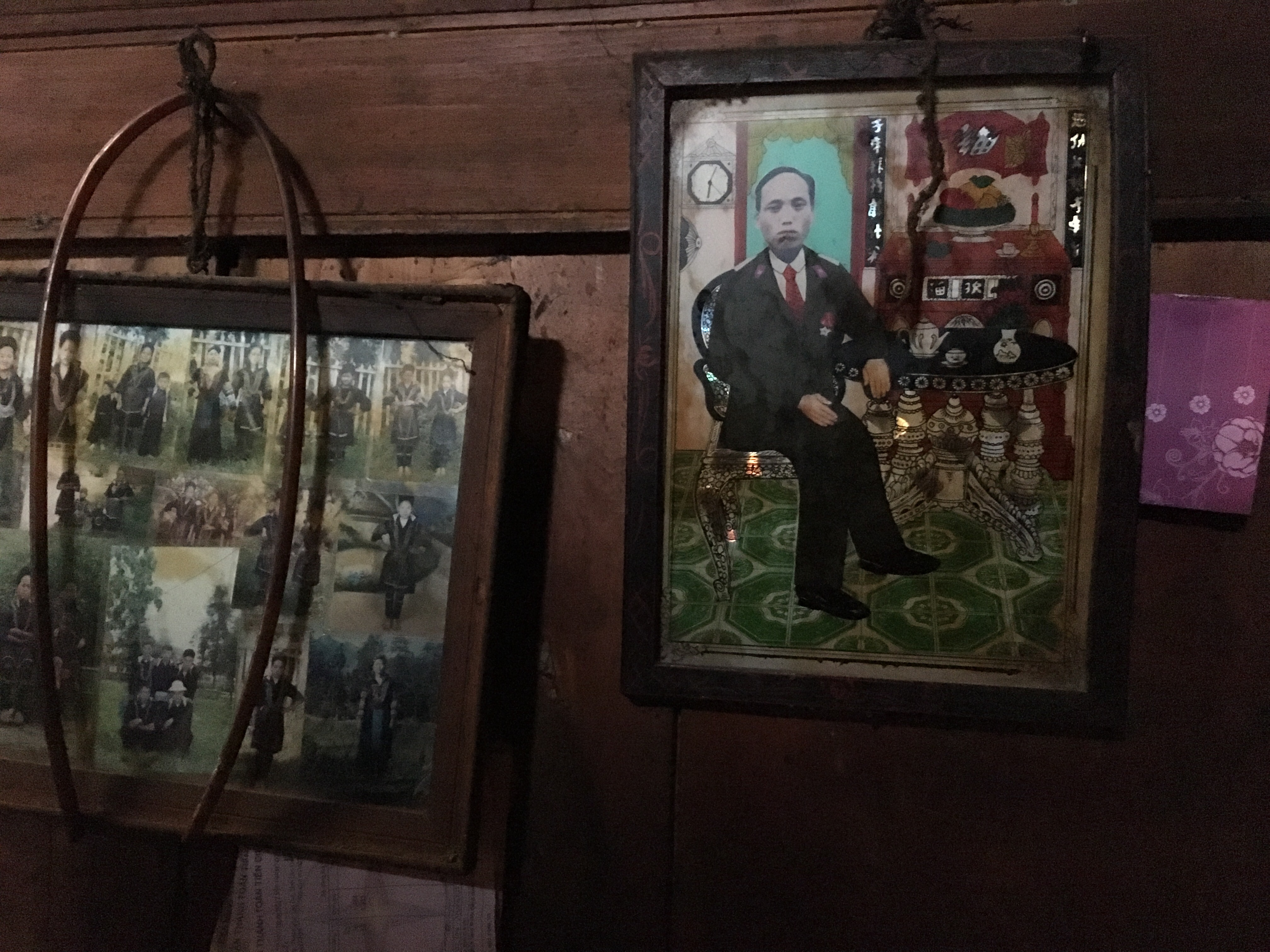
The below photo of her husband, he drank himself to death. Drinking a major activity of the men according to the women, especially during non-rice planting seasons.
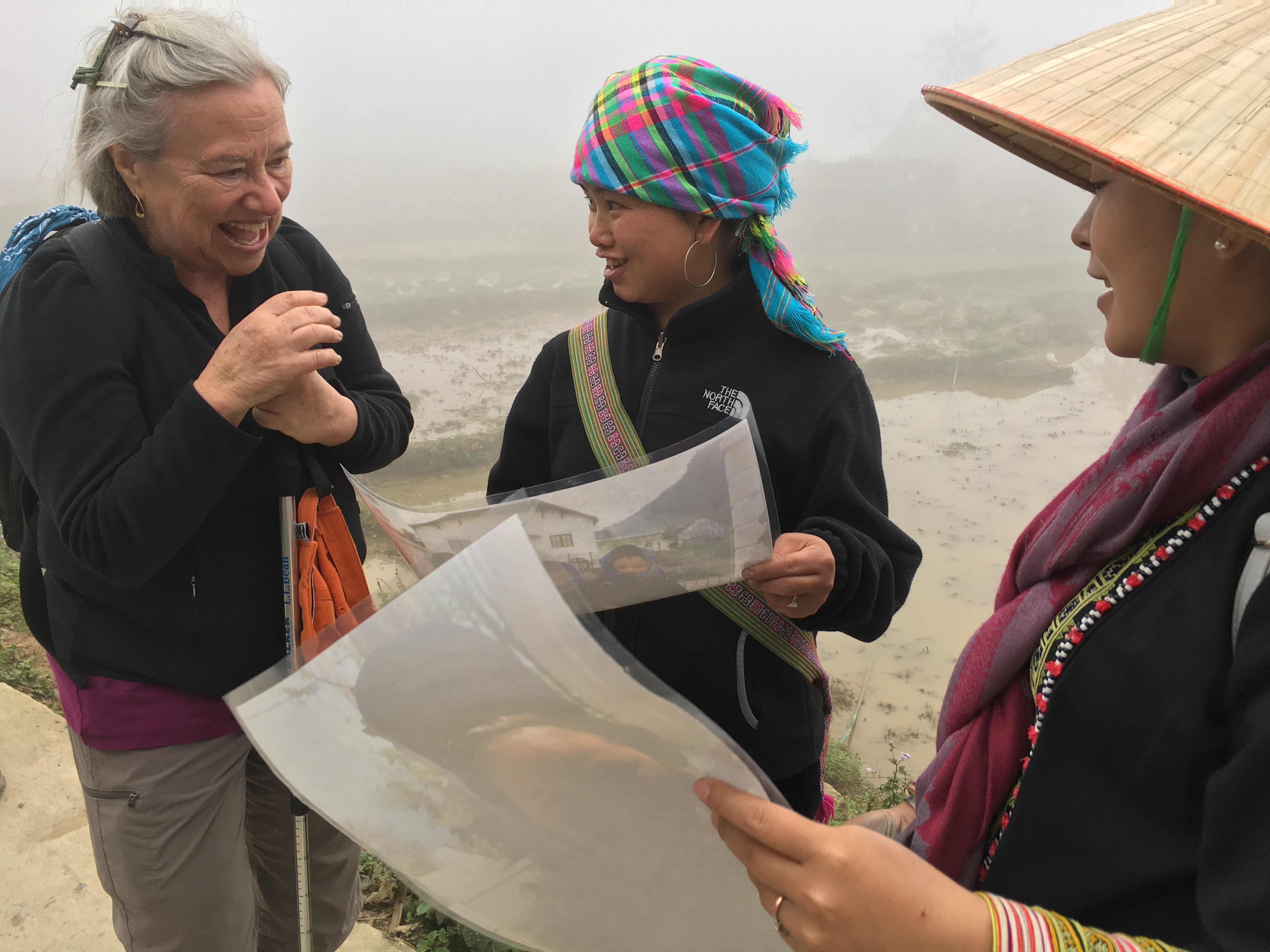
Linda and her husband brought their son’s to Vietnam just after it opened up, 19 years ago I think, after she had been here with the Red Cross and he with navy during what the Vietnamese call the American Agression. Three 15 year old girls became good friends with Linda and she brought photos to try to find them. Mai knew the one below as a fellow tour guide.After some phone calls, she got dropped of on our hike, is married with kids. They were so happy to see each other. One of the 3 now lives in the US.
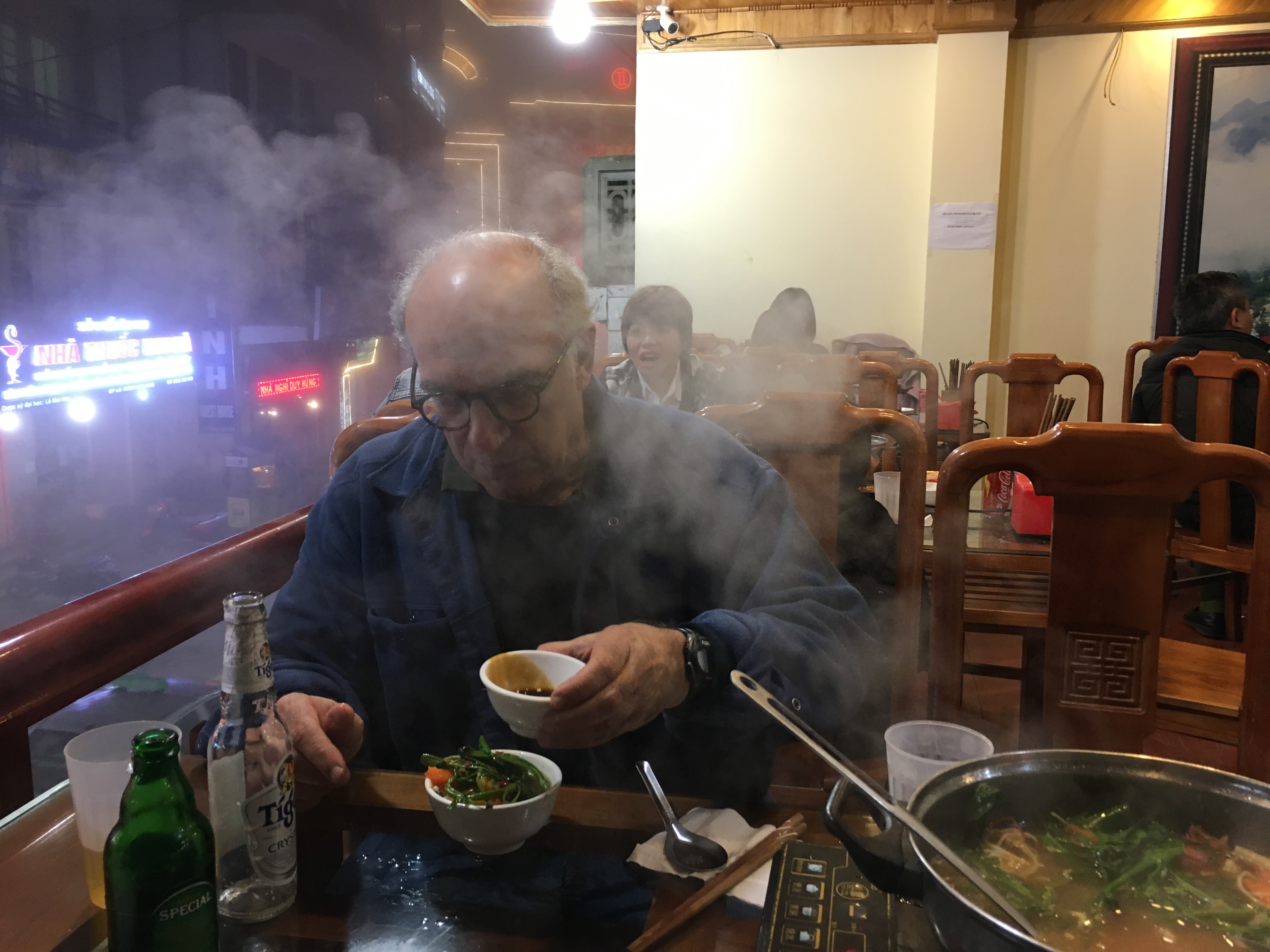
Marty found a Sapa restaurant with only locals that has a hot plate with a boiling pot of soup for each table. Yum.
 Traveling Randy
It’s hard to see why you wouldn’t have liked Sapa. It all looks so interesting. Thanks for posting so many good details.
LikeLike
What interesting stories.
I’d love to see what women were weaving. It must be amazing to see these stories unfold. I LOVE the portrait of the husband seated at the table. Bizarre.
Continue to enjoy and be well.
Tried to include Jade and Gage in Mishi’s 30th birthday on Long Island but Gage misplaced his keys. 😦 XxxxxxxxxJoni
LikeLike
What is the drawing in wax?? Is she using wax to draw, or is the thing on which she is drawing made of wax?? And is it for printing on cloth??
LikeLike
That is clay that he sketches on with a long stick before another guy sculpts with more clay, then glaze, then cut into squares and fire before reassembling.
LikeLike
Is the photo of the dead husband part illustration and part photo? It looks like a collage maybe, with photos of his face and hands put into a collage of other materials making up the scene, which would be cool….
LikeLike
It looked like a collage. They apparently have pictures ready-made to put a face into. It looked like folk art.
LikeLike